




Knowing how to crack SSB interview for girls Punjab is the single most important question separating NDA aspirants who get commissioned from those who do not. The UPSC NDA written examination is cleared by roughly 3% to 5% of applicants — but even among those who clear it, only 25% to 30% pass the five-day Services Selection Board evaluation. The written exam is a filter. The SSB is the real test.
This guide explains the complete SSB process — Day 1 through Day 5 — with the specific preparation strategy that Mai Bhago AFPI Mohali has used to achieve a 60% commission rate across 175 lady cadets. Understanding how to crack SSB interview for girls Punjab requires more than memorising OLQ definitions. It requires building the underlying qualities through years of structured preparation, not weeks of coaching.
Mai Bhago AFPI Mohali is a Punjab Government residential institute that trains Class 10 pass-out girls in a three-year programme designed around SSB readiness from Day 1. The institute’s 60% commission rate — against a national average of 15% to 20% — is the most direct evidence available of what systematic SSB preparation looks like in practice. Girls who genuinely want to understand how to crack SSB interview for girls Punjab should study this model carefully before choosing any preparation route.
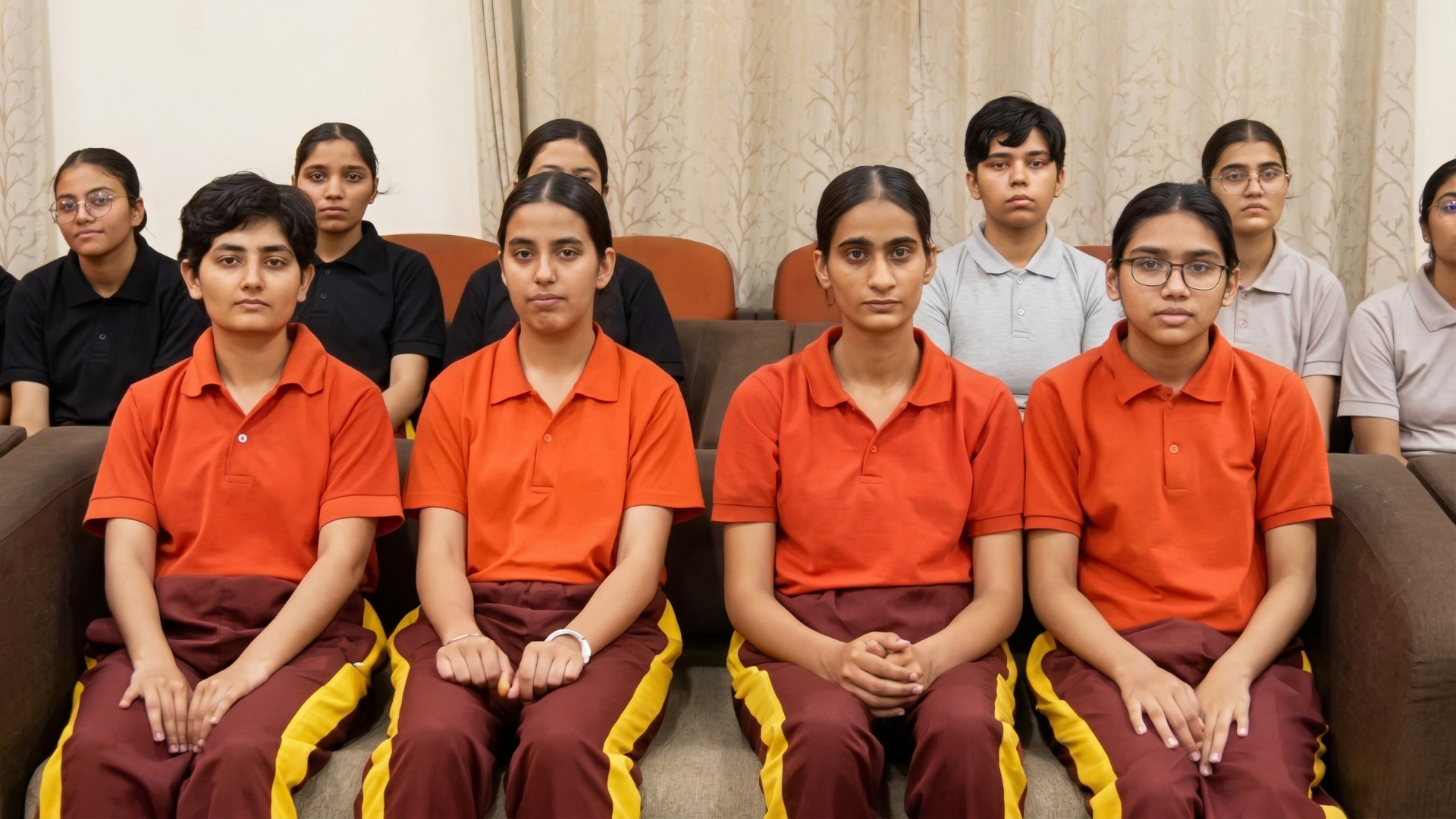
Why the SSB Filters More Candidates Than the Written Exam
The question of how to crack SSB interview for girls Punjab starts with understanding what the SSB actually evaluates — and why it is designed to be difficult to game. The Services Selection Board does not assess academic knowledge, speed of calculation, or information recall. It assesses personality. Specifically, it measures whether a candidate possesses the 15 Officer-Like Qualities (OLQs) that the Indian Army has identified as predictors of effective leadership in the field.
Those 15 OLQs include Effective Intelligence, Reasoning Ability, Organising Ability, Power of Expression, Social Adaptability, Cooperation, Sense of Responsibility, Initiative, Self-Confidence, Speed of Decision, Ability to Influence the Group, Liveliness, Stamina, Determination, and Courage. These are not skills that can be memorised or performed convincingly for 15 minutes. They are observable across 200-plus hours of assessment — spread over five days — by trained military psychologists and experienced officers.
This is why the SSB recommendation rate is so low even among written exam qualifiers. A candidate who has not genuinely developed these qualities — through experience, feedback, and high-pressure practice — cannot sustain a convincing presentation across five days of continuous observation. Knowing how to crack SSB interview for girls Punjab is therefore less about technique and more about authentic readiness.
How Mai Bhago AFPI’s 60% Commission Rate Is Built on SSB Preparation
Mai Bhago AFPI Mohali achieves its 60% commission rate — 105 out of 175 lady cadets recommended — because SSB preparation is not an add-on at the end of the programme. It is embedded into every aspect of the three-year residential training from the first week. The institute’s approach to how to crack SSB interview for girls Punjab rests on one principle: build the OLQs through daily lived experience, not preparation sessions.
In practical terms, this means leadership rotation is built into the daily schedule: cadets take turns commanding platoon activities, managing PT sessions, and leading mess committees. Group tasks and outdoor activities mirror GTO exercises — not as occasional practice, but as part of the weekly routine. Psychological tests similar to TAT and WAT are conducted periodically throughout the three years, with structured feedback given by trained staff. By the time a Mai Bhago AFPI cadet reaches her actual SSB, she has experienced the format hundreds of times in practice conditions.
The results are measurable. The national NDA commission rate sits at 15% to 20%. At Mai Bhago AFPI, it is 60%. Any serious answer to how to crack SSB interview for girls Punjab must account for this gap. The gap is not explained by smarter girls or easier boards. It is explained by 1,000 days of applied preparation versus a few months of coaching. For a full profile of what this preparation produces in real cadets, the Punjab girls joining Indian Army success stories from Mai Bhago AFPI documents three detailed alumni profiles.
The 5-Day SSB Process: Complete Day-by-Day Breakdown
Understanding how to crack SSB interview for girls Punjab requires a precise map of the five-day SSB process. Each day tests a different dimension of personality and performance. Candidates who arrive without knowing what to expect — or who have only theoretical knowledge of the format — are at a significant disadvantage from the first hour.
Day 1 — Screening: Candidates arrive at the board and undergo the Officer Intelligence Rating (OIR) test — a series of verbal and non-verbal reasoning assessments. This is followed by the Picture Perception and Discussion Test (PPDT), in which candidates view a hazy image for 30 seconds, write a story about it in 4 minutes, and then participate in a group narration and discussion. Candidates who do not clear Stage 1 on Day 1 are sent back. Typically, 30% to 50% of candidates are screened out on this single day.
Days 2 to 4 — Stage 2: The remaining candidates undergo three full days of psychological tests, Group Testing Officer (GTO) tasks, and the Personal Interview (PI). These run simultaneously across candidates in rotating groups. The psychological buffer (Day 2 morning) covers TAT, WAT, SRT, and SDT. GTO tasks — including Group Obstacle Race, Command Task, Half Group Task, Individual Obstacles, Lecturette, and Group Discussion — are conducted outdoors. The Personal Interview is a 30-to-45-minute one-on-one evaluation with a Senior Assessor.
Day 5 — Conference: All assessors — the Psychologist, the GTO, and the Interviewing Officer — meet with the board President to finalise their individual assessments and reach a collective recommendation. Recommended candidates are informed on Day 5. Results are released the same day. For candidates seeking a broader understanding of where the SSB fits in the full NDA journey, the NDA for girls in Punjab 2026 guide covers the complete path from writing the UPSC exam to commissioning.
Stage 1 — OIR and PPDT: What Assessors Look For
The OIR test is straightforward to prepare for: it is a timed intelligence test covering analogies, pattern recognition, number series, and logical sequences. Consistent practice with OIR-format papers builds speed and reduces anxiety. Girls who are comfortable with Class 11-12 Maths and have practised standardised reasoning tests regularly should clear OIR without difficulty. This is one area where knowing how to crack SSB interview for girls Punjab overlaps with conventional academic preparation.
The PPDT is different. A blurred, ambiguous image is shown for 30 seconds. The candidate writes a story about the image in 4 minutes — including a clear protagonist, a story arc, and a resolution. The story is then narrated to the group, and a group discussion follows with the goal of reaching a common story. What assessors evaluate is not the quality of the individual story. They evaluate: Does the candidate listen actively? Does she lead or withdraw during the discussion? Does she build on others’ contributions or compete against them? Is her communication clear and confident?
The PPDT reveals social adaptability and communication quality within the first 90 minutes of Day 1. Candidates who have never participated in structured group discussions struggle here — not because the task is difficult, but because they have no habit of assertive collaborative communication. Three years of group-living at Mai Bhago AFPI builds this habit deeply. This is one of the clearest structural answers to how to crack SSB interview for girls Punjab: develop group communication skills through repeated practice in high-stakes peer environments, not through theory.
Psychological Tests Decoded: TAT, WAT, SRT, SDT
The psychological battery at the SSB is the most misunderstood element for candidates asking how to crack SSB interview for girls Punjab. Every test in this battery is designed to detect authenticity — not to be cracked through templates. A candidate who has memorised “ideal” TAT stories or “correct” WAT completions and consistently applies them will be identified by the psychologist, whose job is specifically to detect inconsistency between formal presentations and underlying personality.
The Thematic Apperception Test (TAT) works as follows: 12 images are shown for 30 seconds each, and the candidate writes a story about each image in 4 minutes. The stories reveal what themes a candidate naturally gravitates toward — achievement, conflict, cooperation, authority, adversity — and how she resolves them in narrative form. Preparation should focus not on memorising stories, but on cultivating a genuine worldview of positive agency: protagonists in your stories should act decisively, face challenges honestly, and reach constructive outcomes — because this reflects how you actually think, not just how you want to appear.
The Word Association Test (WAT) presents 60 words at 15-second intervals. The candidate writes the first sentence that comes to mind for each word. The same principle applies: consistency across 60 responses is what matters. Candidates at Mai Bhago AFPI practice WAT regularly — not to memorise “correct” sentences, but to develop a consistent response pattern that reflects genuine mental orientation toward responsibility, initiative, and social contribution.
The Situation Reaction Test (SRT) presents 60 situations in 30 minutes. Each situation describes a real-world challenge — a burning building, a drowning colleague, a miscommunication during a group task — and the candidate writes her immediate reaction. What the psychologist reads is not the “correct” reaction but the candidate’s instinctive decision-making pattern. The Self-Description Test (SDT) asks the candidate to describe herself and her personality from five different perspectives, including what her parents, teachers, and friends think of her. This test checks for self-awareness and consistency with what assessors have observed across other tests.
GTO Tasks: Physical and Mental Preparation
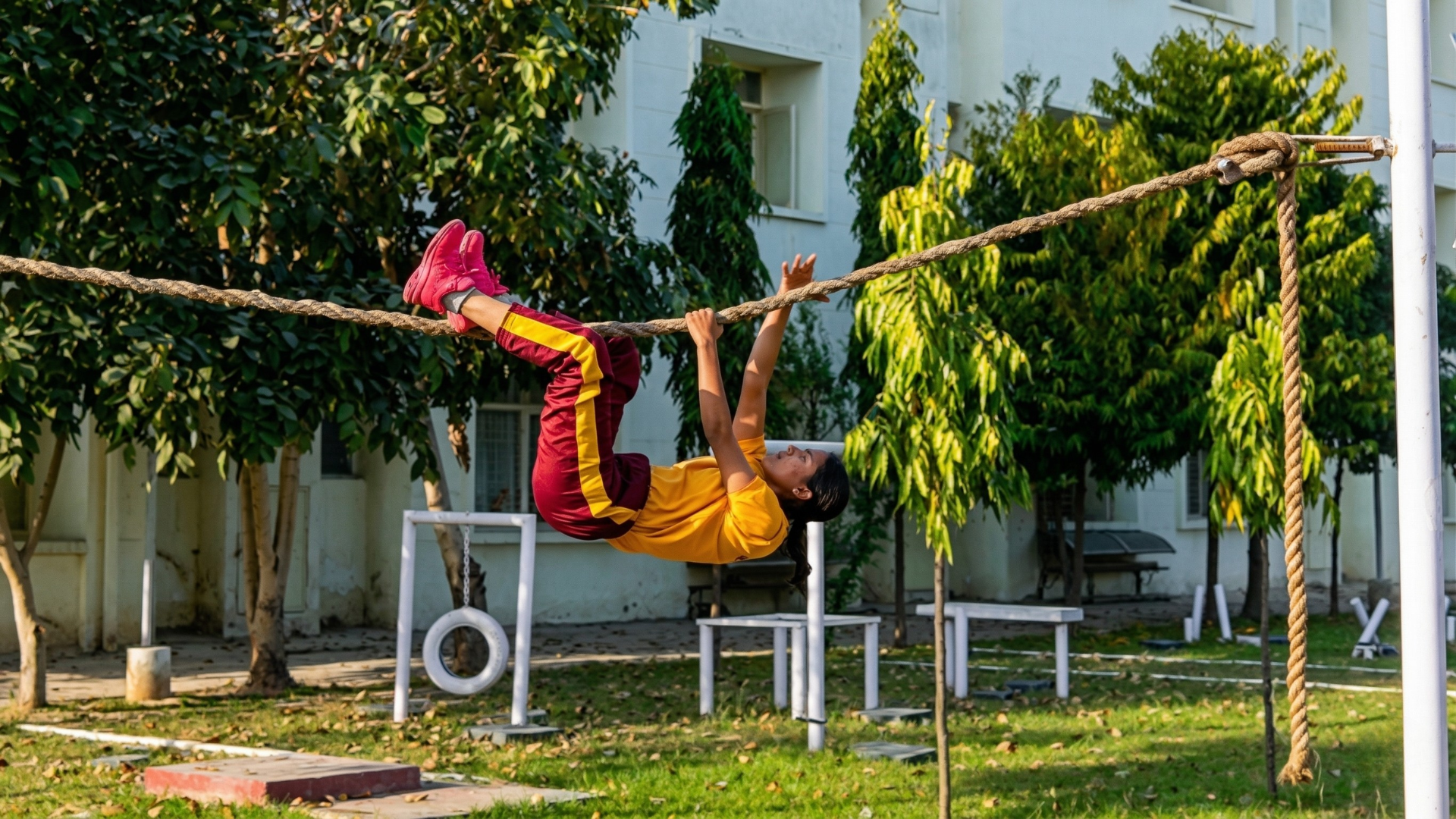
The Group Testing Officer tasks are where how to crack SSB interview for girls Punjab moves from psychological preparation to physical and leadership readiness. The GTO series tests candidates in outdoor group challenges that assess initiative, physical capability, risk tolerance, and the ability to lead while cooperating. These tasks cannot be prepared for with a textbook — they require physical conditioning and repeated group practice under realistic conditions.
Key GTO tasks and their specific demands:
- Group Obstacle Race (GOR): A 10-obstacle physical course completed as a group. Physical fitness is a prerequisite. Candidates who are not in good cardiovascular shape struggle with the physical demands and are unable to lead or contribute effectively to the group. Mai Bhago AFPI’s daily PT regime — 5 AM runs, obstacle drills, and endurance training — directly conditions cadets for the GOR.
- Half Group Task (HGT) and Full Group Task (FGT): Groups are given materials and a goal — to cross an obstacle or build a bridge — with specific rules about what can and cannot touch the ground. What assessors evaluate is who takes initiative, who plans effectively, who adapts when the first plan fails, and who supports the group versus who withdraws. Leadership under ambiguity is the primary OLQ being tested.
- Command Task: The candidate is made the commander and given a task to complete with the help of other candidates. This directly tests the ability to plan, delegate, and lead under time pressure. Three years of institutional leadership practice at Mai Bhago AFPI — including leading physical training sessions, mess duties, and academic seminars — builds the command instinct this task requires.
- Lecturette: The candidate speaks for 3 minutes on a topic chosen from a card. Topics range from current affairs to social issues. Clarity, confidence, and pace of communication are assessed. Regular elocution and public speaking practice at the institute builds this capability across all three years.
- Individual Obstacles: A 10-obstacle individual physical course. Stamina, agility, and risk tolerance are directly assessed. Candidates who are physically prepared perform significantly better and recover faster between tasks.
Personal Interview: How Punjab Girls Can Present Authentically
The Personal Interview (PI) is a 30-to-45-minute structured conversation between the candidate and a Senior Assessor. For Punjab girls understanding how to crack SSB interview for girls Punjab, the PI carries a specific advantage: Punjab’s culture, military heritage, and family values are directly relevant to the OLQ framework. A girl who can articulate why she wants to serve — clearly, without performance — has an enormous advantage over a candidate who has memorised “motivational answers.”
The PI is structured around the candidate’s PIQ (Personal Information Questionnaire), which she fills out on Day 1. The assessor will probe every point in the PIQ — including hobbies, family background, school achievements, current affairs knowledge, and motivations for joining the armed forces. Inconsistency between the PIQ and verbal answers is flagged immediately. Candidates who have lived an authentic, structured life — who have genuinely pursued interests, held responsibilities, and faced real challenges — have more material to draw from than those who have manufactured answers for the board.
For Punjab girls from agricultural families, towns with police or paramilitary backgrounds, or families with any form of public service history, this is a natural advantage. Assessors are looking for genuine life experience, not polished urban presentation. The key is to articulate that experience clearly and confidently. Communication skills — developed through years of structured practice at an institute like Mai Bhago AFPI — make this articulation possible even for girls who have never been formally trained in interview technique.
Common SSB Mistakes Female Candidates from Punjab Make
Any honest guide on how to crack SSB interview for girls Punjab must address the specific errors that cost candidates their recommendation. These are not unique to Punjab, but they are patterns observed consistently in candidates who lack structured institutional preparation.
- Withdrawing in group tasks: Many candidates — particularly those from more reserved backgrounds — underperform in GTO group tasks by staying silent, deferring to louder peers, or waiting to be invited to lead. Assessors interpret silence as lack of initiative. The instinct to speak, contribute, and lead must be built through repeated practice, not willpower on the day.
- Inconsistent psychological test responses: Candidates who prepare TAT stories and WAT sentences from “SSB preparation books” often produce inconsistent psychological profiles — their test responses reflect a different personality from what the GTO and PI reveal. Psychologists are trained to detect this. The solution is honest, structured self-development — not template preparation.
- Physical underperformance in GTO: Girls who have not trained for the obstacle course or sustained running arrive at the GTO physically unprepared. This affects not just their GOR performance, but their energy levels across all remaining tasks. Physical readiness is non-negotiable.
- Over-rehearsed PI answers: Assessors regularly stop candidates mid-answer and reframe the question. Candidates who have rehearsed fixed answers lose their footing immediately. Authentic knowledge, direct communication, and adaptability in conversation cannot be faked.
- Not knowing current affairs: The PI routinely covers current affairs — defence news, Punjab-specific developments, national security policy, and general awareness. Candidates who read nothing beyond syllabus material are consistently caught short on this dimension.
Mai Bhago AFPI’s residential programme systematically eliminates all five patterns across three years. The institute’s cadets are accustomed to speaking in groups, maintaining consistent self-presentation, staying physically conditioned, communicating directly under pressure, and following current affairs as a daily habit. This is the structural answer to how to crack SSB interview for girls Punjab that no short-term coaching programme can replicate. For the broader framework of quality and preparation standards that underpin this approach, the NDA preparation guide for girls in Punjab outlines the full pipeline from eligibility to commission.
How 3 Years of Residential Training Builds the 15 OLQs SSB Assesses
The definitive answer to how to crack SSB interview for girls Punjab is this: build the 15 OLQs through sustained, structured, lived experience — not through surface-level preparation. This is exactly what three years of residential training at Mai Bhago AFPI Mohali delivers. Each of the 15 OLQs has a direct correspondent in how the institute operates daily.
Effective Intelligence and Reasoning Ability are developed through the institute’s integrated academic programme — PSEB Class 11 and 12, simultaneously aligned with NDA written preparation. The simultaneous demands of two rigorous academic tracks build intellectual agility and the ability to apply knowledge in non-standard contexts.
Organising Ability, Initiative, and Speed of Decision are developed through rotational leadership responsibilities. Every cadet cycles through positions of authority — organising PT rosters, managing mess logistics, leading junior batch orientations, and heading academic committees. These responsibilities carry real consequences if mismanaged, which builds genuine decision-speed under pressure.
Social Adaptability, Cooperation, and Ability to Influence the Group are the direct products of residential life itself. Sharing space, meals, training, academic stress, and personal challenges with 60-plus peers across three years builds the social intelligence that assessors specifically test in the PPDT and GTO. This cannot be created artificially. It requires the crucible of genuine collective living. The broader context on women’s expanding roles in the Indian Armed Forces — and the OLQs increasingly valued in female officers — is documented in the 2026 Manorama analysis on gender inclusion in India’s defence forces.
Physical Stamina and Determination are the most visible products of the institute’s training. Daily 5 AM PT, progressive obstacle conditioning, timed running programmes, and cross-training build a baseline physical standard that mirrors what the SSB’s GTO tasks demand. By Year 3, the institute’s physical training sessions run at full SSB-simulation intensity.
30-Day Focused Mock SSB Schedule for Self-Preparation
For girls who are preparing independently — outside of an institutional programme — this 30-day schedule provides the minimum structure needed to address each assessment dimension before an SSB attempt. Serious candidates seeking to understand how to crack SSB interview for girls Punjab through self-study should use this as a framework, not a substitute for the institutional preparation that produced Mai Bhago AFPI’s 60% rate.
The table below summarises a structured 30-day preparation approach across the four major SSB assessment dimensions.
| Week | Focus Area | Daily Activities | OLQs Targeted |
|---|---|---|---|
| Week 1 | Physical baseline + OIR practice | 30-min timed run, 20 push-ups/sit-ups, 2 OIR practice papers daily | Stamina, Effective Intelligence, Reasoning Ability |
| Week 2 | Psychological test development | 10 TAT stories/day, 60 WAT sentences/day, 1 SRT paper daily; review with a mentor for consistency | Determination, Self-Confidence, Sense of Responsibility |
| Week 3 | Group tasks + communication | Daily group discussions with 3-5 peers on current affairs; PPDT practice with group narration; 1 mock lecturette/day | Social Adaptability, Cooperation, Power of Expression, Liveliness |
| Week 4 | Mock SSB simulation + PI preparation | Full mock PI sessions with an adult, obstacle training, PIQ completion and review, current affairs daily | Initiative, Speed of Decision, Ability to Influence, Courage, Organising Ability |
Frequently Asked Questions
For the NDA entry route, candidates get one SSB attempt per NDA written exam cycle. If recommended, they proceed to the medical board. If not recommended, they can attempt the next NDA written examination and appear for the SSB again.
There is no fixed lifetime limit on NDA attempts, but the upper age limit of 19.5 years means candidates typically have two to four attempts maximum. This is why knowing how to crack SSB interview for girls Punjab before the first attempt matters — every attempt counts. Mai Bhago AFPI cadets typically attempt the SSB in their third year of training, when their preparation is at maximum readiness.
The national recommendation rate at the SSB for NDA candidates (including female candidates) is estimated at 25% to 30% of those who appear — but this figure applies only to candidates who have already cleared the UPSC NDA written exam.
The overall commission rate from the full NDA pipeline (written + SSB) is 15% to 20% of all written exam qualifiers. Mai Bhago AFPI Mohali achieves 60% across 175 lady cadets — a figure that represents the impact of knowing how to crack SSB interview for girls Punjab through systematic institutional preparation rather than sporadic coaching.
Yes — and this is an important point for Punjab girls from Punjabi-medium or Hindi-medium backgrounds. The SSB Personal Interview does not penalise a candidate for accented English or grammatical imperfection. Assessors are specifically instructed to evaluate the quality of thought and authenticity of expression, not linguistic polish.
A girl who speaks clearly, makes eye contact, and answers with genuine conviction will outperform a candidate with polished English and rehearsed, hollow answers. The institute environment at Mai Bhago AFPI builds this spoken confidence across three years through daily English-medium instruction, group discussions, and public speaking practice.
Candidates are advised to wear neat, comfortable, modest clothing appropriate for both formal settings (the PI) and outdoor physical activity (the GTO). During GTO outdoor tasks, tracksuit or PT clothing is standard. Appearance as such is not a scored dimension of how to crack SSB interview for girls Punjab — assessors are evaluating behaviour, not fashion. However, neatness and grooming signal self-discipline and self-respect, which are relevant OLQ indicators. Avoid overdressing for the PI; confident simplicity is always appropriate.
Very important — particularly for the Personal Interview and the Lecturette. Assessors regularly probe candidates on defence news, Punjab-specific developments, national security policy, and contemporary events. A knowledge gap here signals a lack of initiative and intellectual curiosity, both of which are OLQs.
Candidates who follow defence news, government policy updates, and Punjab affairs as daily habits — as is standard at Mai Bhago AFPI Mohali — are demonstrably better prepared. For reference, the PIB March 2026 documentation of expanding roles of women in the Indian Armed Forces is exactly the kind of content SSB candidates should be familiar with.
The core SSB format — OIR, PPDT, psychology tests, GTO, and PI — is standardised across Army, Navy, and Air Force Selection Boards, though each service has its own board locations and may place different emphasis on specific OLQs relevant to their roles. For female NDA candidates entering through the combined NDA exam, the service-specific SSB is attended after writing the same UPSC paper. The preparation strategy for how to crack SSB interview for girls Punjab applies across all three services since the core OLQ framework is identical.
At Mai Bhago AFPI Mohali, SSB preparation is not a course — it is the programme itself. From Year 1, cadets undergo weekly group discussions moderated by trained staff, regular TAT and WAT practice sessions with individual feedback, outdoor obstacle course training that mirrors GTO demands, and rotational leadership responsibilities across campus activities.
By Year 3, the institute runs full mock SSBs — realistic five-day simulations with external assessors evaluating candidates across all dimensions. Cadets who complete this programme arrive at their actual SSB not as first-timers but as practitioners with hundreds of hours of applied experience. How to crack SSB interview for girls Punjab is, in the Mai Bhago AFPI model, a question about years of daily life choices — not days of last-minute preparation.
See How Mai Bhago AFPI Mohali Prepares Every Girl for SSB from Day 1 of Joining
The most effective answer to how to crack SSB interview for girls Punjab is three years of structured residential training at Mai Bhago AFPI Mohali — a Punjab Government institute where 105 out of 175 lady cadets have been recommended for commission. Applications are open for Class 10 pass-outs from Punjab. Seats are limited.
