Indian Navy entry for women is the least discussed of the three services in Punjab, and it holds the most interesting route of all for a strong Class 12 student. There is a way into the Navy that needs no defence written exam at all: no NDA paper, no CDS, no INET.
You sit JEE Main, which lakhs of PCM students in Punjab sit anyway, and you are shortlisted on your rank. The Navy then puts you through a four-year B.Tech at the Indian Naval Academy, Ezhimala, pays for every rupee of it, and commissions you as a Permanent Commission officer. Almost nobody in Punjab applies. Here is every officer route into the Indian Navy that is open to women, and who each one actually suits.

1. Route 1: NDA, Naval Wing and INA, After Class 12
The first form of Indian Navy entry for women opens straight after Class 12. The UPSC NDA and NA examination covers two distinct naval destinations: the Navy Wing of the National Defence Academy, Khadakwasla, and the 10+2 Cadet Entry Scheme at the Indian Naval Academy (INA), Ezhimala.
Both are open to women, with vacancies notified separately for female candidates in each cycle. In the NDA and NA (I) 2026 cycle, for instance, the notification carried 42 vacancies for NDA Navy including 5 for women, and 24 for INA including 3 for women. Those numbers are small: within Indian Navy entry for women, vacancies in any single NDA cycle run to a handful. That is a reason to prepare seriously, not a reason to skip it.
PCM is compulsory. Class 12 must include Physics, Chemistry and Mathematics for both the Navy Wing and INA. There is no exception, and it is decided in Class 11. Everything else, the exam pattern, the age window and the application process, is covered in our NDA eligibility guide for women.
2. Route 2: 10+2 (B.Tech) Cadet Entry Scheme, via JEE Main
This is the route worth reading twice, and the strongest part of Indian Navy entry for women for a Class 12 student with PCM.
What it is: a four-year B.Tech at the Indian Naval Academy, Ezhimala, leading to a Permanent Commission as a Sub Lieutenant in the Executive or Technical branches. The degree is awarded by Jawaharlal Nehru University.
How you get in: you must have appeared for JEE (Main). Naval Headquarters publishes a JEE Main Common Rank List cut-off, and candidates above it are called for SSB. There is no separate written examination.
Eligibility: Class 12 with a minimum 70% aggregate in Physics, Chemistry and Mathematics; minimum 50% in English in either Class 10 or Class 12; appeared in JEE (Main) for the relevant year; unmarried; and the date-of-birth window specified in each notification.
Vacancies for women: small but real. Recent cycles have carried up to 8 women cadets across branches. What it costs: nothing. During the four years at Ezhimala the Indian Navy bears the entire cost of training, books, reading material, uniform, messing and accommodation, and cadets receive a stipend as per current entitlements.
The streams: Applied Electronics and Communication Engineering for the Executive Branch, Mechanical Engineering for the Engineering Branch, and Electronics and Communication Engineering for the Electrical Branch, as per naval requirement. Top performers from the Mechanical pool are streamed into Naval Architecture and Shipbuilding.
Here is why this deserves attention in Punjab specifically. Thousands of girls in this state sit JEE Main every year and then choose between an engineering college and a fee. This entry offers a fully funded B.Tech from a JNU-affiliated academy, a guaranteed job, a Permanent Commission and an officer’s rank at the end, and the extra effort is one form and an SSB.
One note on merit: the final list is prepared on SSB marks, not on your JEE rank. JEE gets you the call. The SSB decides the outcome, which makes our five-day SSB breakdown the most important thing you read after this page.
3. Route 3: INET, After Graduation
The Indian Navy Entrance Test (INET) is the Navy’s own computer-based screening examination, introduced in 2019 to replace the earlier branch-by-branch written tests. It is conducted by the Indian Navy, not UPSC, typically twice a year, and it is the main graduate-level channel for Indian Navy entry for women.
Who it is for: graduates, both men and women, applying for Short Service Commission and certain Permanent Commission entries. Branches accessible through INET include Executive entries such as General Service, Air Traffic Controller, Logistics, Pilot and Observer; Technical entries in the Engineering and Electrical branches; and the Education Branch. Eligibility conditions, degree discipline, percentage and age band, differ by branch, and women’s eligibility is specified branch by branch in each notification.
Pattern: a computer-based test of four sections, with 4 marks for a correct answer and 1 mark deducted for a wrong one. That negative marking punishes guessing. The route runs INET, then the SSB interview at a naval Services Selection Board, then the medical examination and the All India Merit List. Clearing INET does not guarantee selection. It gets you to the board.
4. Route 4: SSC Officer Entries and the Education Branch
The fourth strand of Indian Navy entry for women is the notified SSC entries. Beyond INET, the Navy periodically notifies Short Service Commission entries with their own eligibility conditions, including engineering graduates for the General Service (Executive) and Technical branches, law graduates, and post-graduates for the Education Branch. Vacancy counts for women in these entries are notified separately and are typically in single digits per cycle.
These entries are worth tracking directly on joinindiannavy.gov.in rather than through third-party sites, because they open and close on short notice and the eligibility fine print changes.
Mai Bhago AFPI’s own alumnae have taken this route. Lady Cadet Diksha Sharma of the institute, daughter of a Mohali bus owner and operator, was selected for Pre-Commission Training at the Indian Naval Academy, Ezhimala, in the Education Branch. That is a real, current example of a Punjab girl using a route almost nobody in the state discusses.
5. What Life at INA Ezhimala Looks Like
Every route of Indian Navy entry for women ends at the same place. The Indian Naval Academy at Ezhimala, Kerala, is the Navy’s premier training establishment, spread along the Malabar coast. Cadets undergo academic instruction, seamanship, navigation, physical training and drill, followed by afloat training on naval ships.
For the B.Tech stream of Indian Navy entry for women this is four years. For graduate entries the initial naval orientation course is shorter, followed by professional training on ships and at shore training establishments.
6. Which Route Fits Which Student
Use this to match your stage to the right form of Indian Navy entry for women.
| If you are… | Your route |
|---|---|
| In Class 11 with PCM, strong at Maths, aiming high | NDA (Navy Wing / INA): Permanent Commission, earliest start |
| In Class 12 with PCM and already preparing for JEE Main | 10+2 B.Tech Cadet Entry: no defence written exam, fully funded degree, Permanent Commission |
| A graduate in any stream | INET: the Navy’s own entrance test |
| An engineering graduate | INET Technical entries or notified SSC Technical entries |
| A post-graduate in a teaching discipline | Education Branch entries |
| A law graduate | Navy JAG / Law cadre entries as notified |
If NDA is your target, weigh it against the other services first with our guides to CDS exam eligibility for women and AFCAT eligibility for women.
Frequently Asked Questions
Yes. Indian Navy entry for women after Class 12 runs through the NDA and NA examination (Navy Wing and INA) and through the 10+2 (B.Tech) Cadet Entry Scheme, which shortlists on JEE Main rank.
Yes. Appearing in JEE (Main) for the relevant year is mandatory, and shortlisting for SSB is done on the JEE Main Common Rank List. There is no separate written exam for this route.
No. It affects only whether you are called for SSB. Final merit is prepared on SSB marks.
Yes. Under this part of Indian Navy entry for women, the Navy bears the entire cost of training including books, uniform, messing and accommodation, and cadets receive a stipend.
No. CDS is conducted by UPSC and, for women, leads only to OTA Chennai. INET is conducted by the Indian Navy itself and leads to naval commissions.
A 70% aggregate in Physics, Chemistry and Mathematics, and at least 50% in English in either Class 10 or Class 12. This is the strictest 10+2 bar in Indian Navy entry for women.
Preparing for a naval career in Punjab?
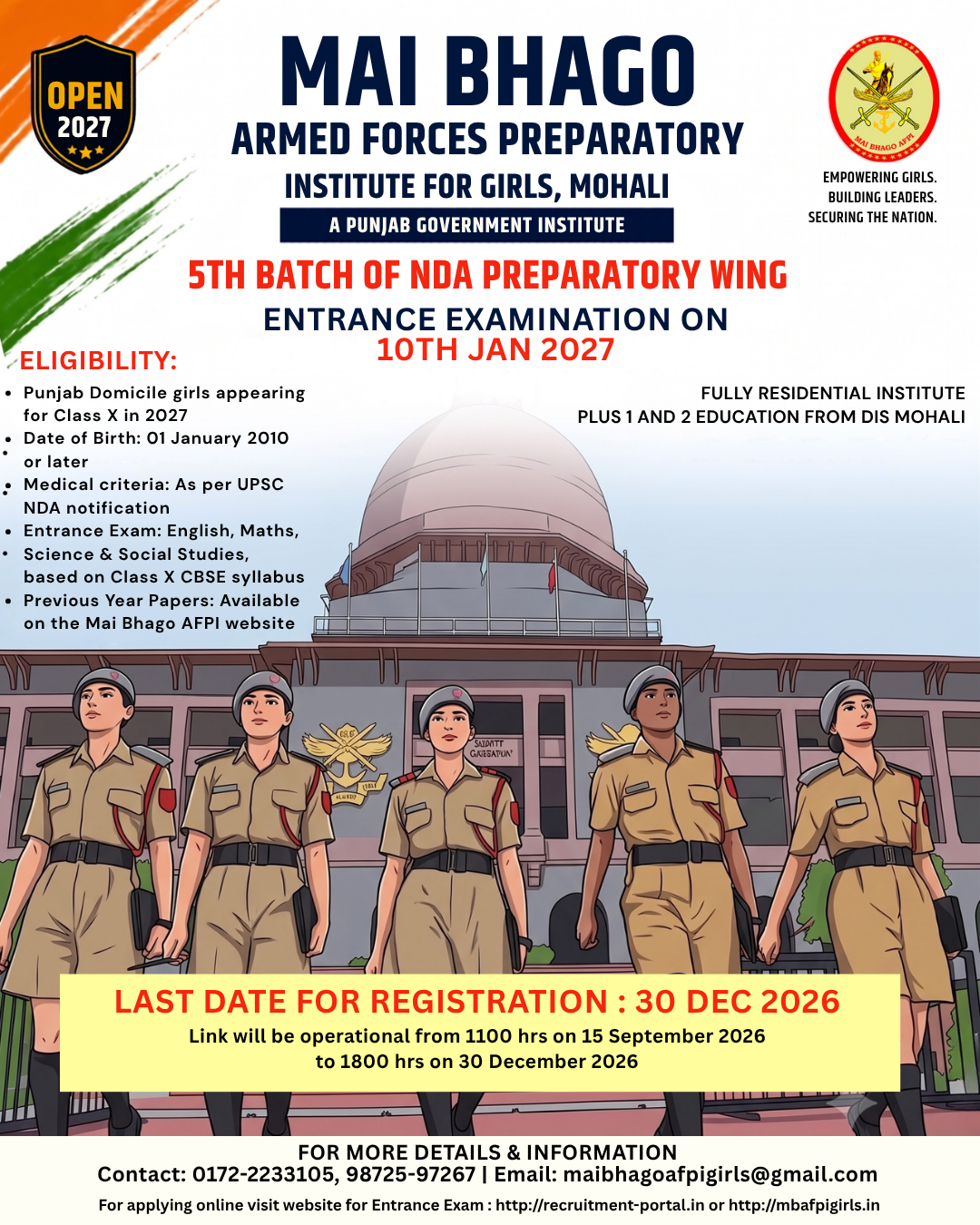
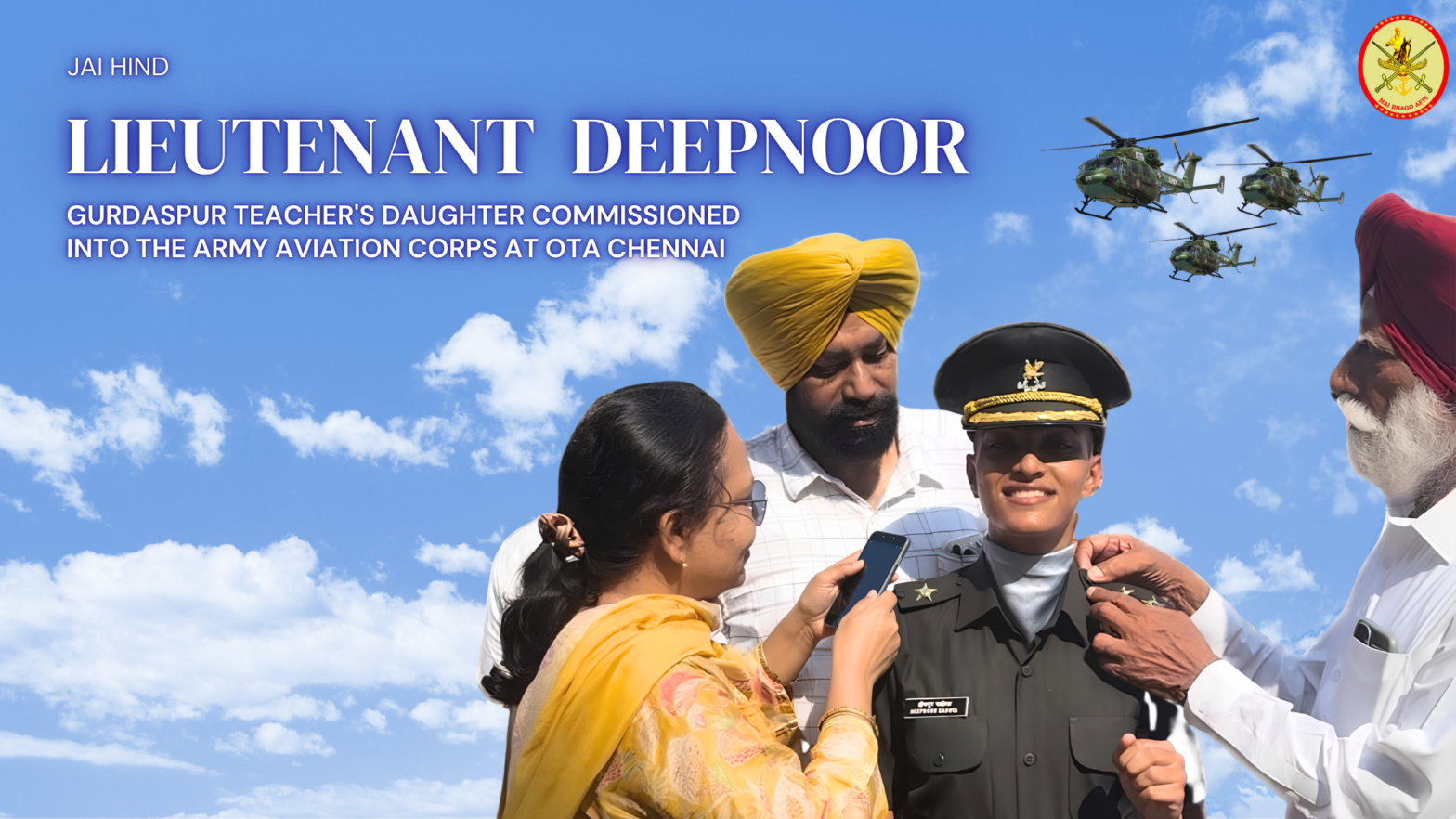
Mai Bhago AFPI, Sector 66, SAS Nagar (Mohali), is a Punjab Government residential institute preparing girls for commissioned officer entry across all three services. Its alumnae are serving in the Army, the Air Force and the Navy. If Indian Navy entry for women is your goal, our NDA Preparatory Wing and Graduate Level Entry programmes are built for it.
Editorial note: vacancy counts, cut-off dates and branch eligibility for women change with every notification. Verify against joinindiannavy.gov.in and upsc.gov.in before applying. This guide reflects the position as of September 2026.